
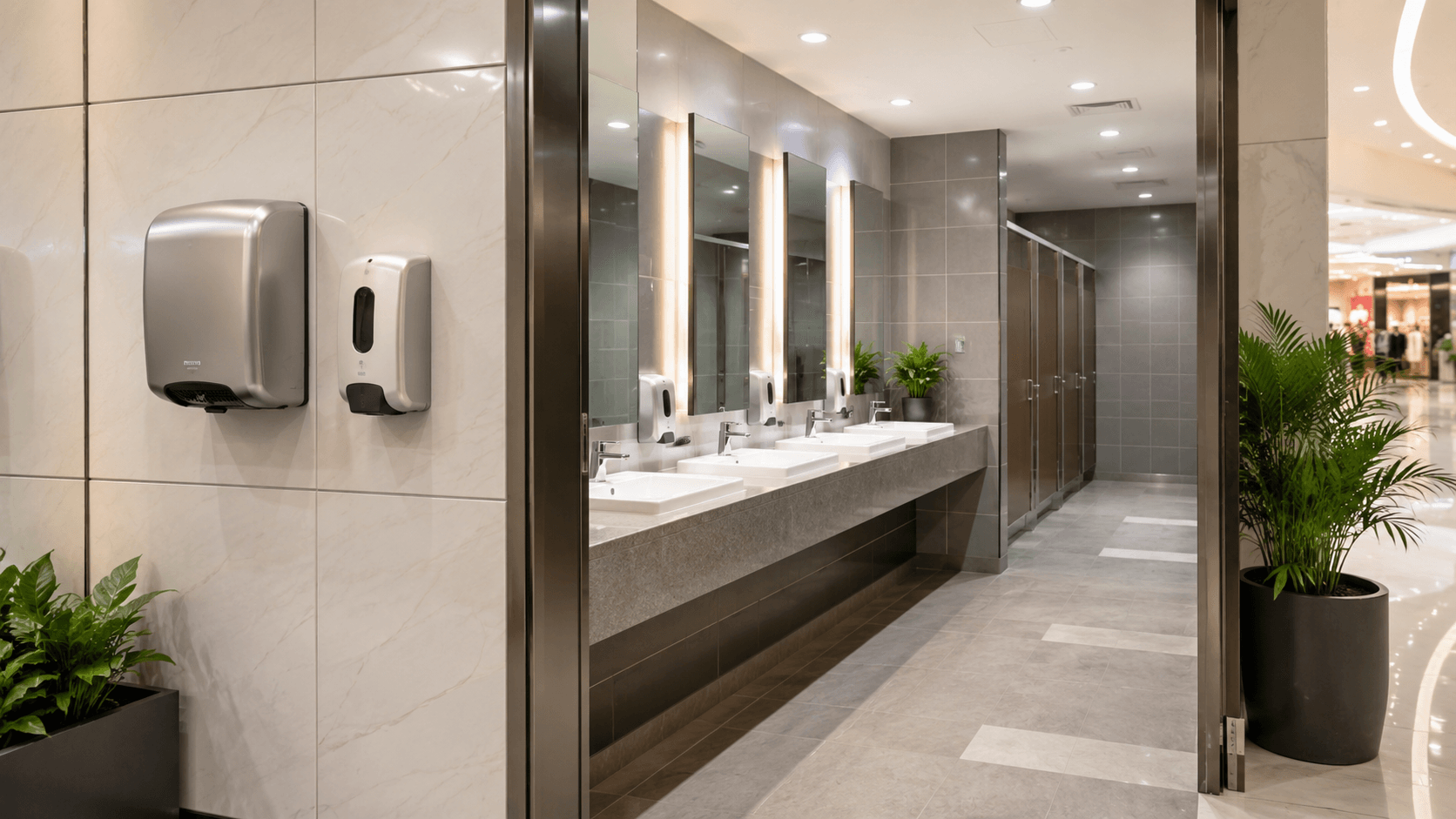
Most facility managers only think about washroom hardware once, when the building first opens or a renovation forces the issue. Then it sits untouched for years, quietly costing money in electricity, refills, and maintenance callouts that nobody’s tracking against a budget line. For anyone sourcing hand dryers and soap dispensers wholesale for an office tower or shopping mall, getting the specification right at the buying stage saves far more than a few rupees per unit ever will.
This guide walks through what actually matters when specifying hand dryers and soap dispensers at scale, and what else a facility needs on hand to keep them running once they’re installed.
Why Offices and Malls Need a Dedicated Washroom Hardware Strategy
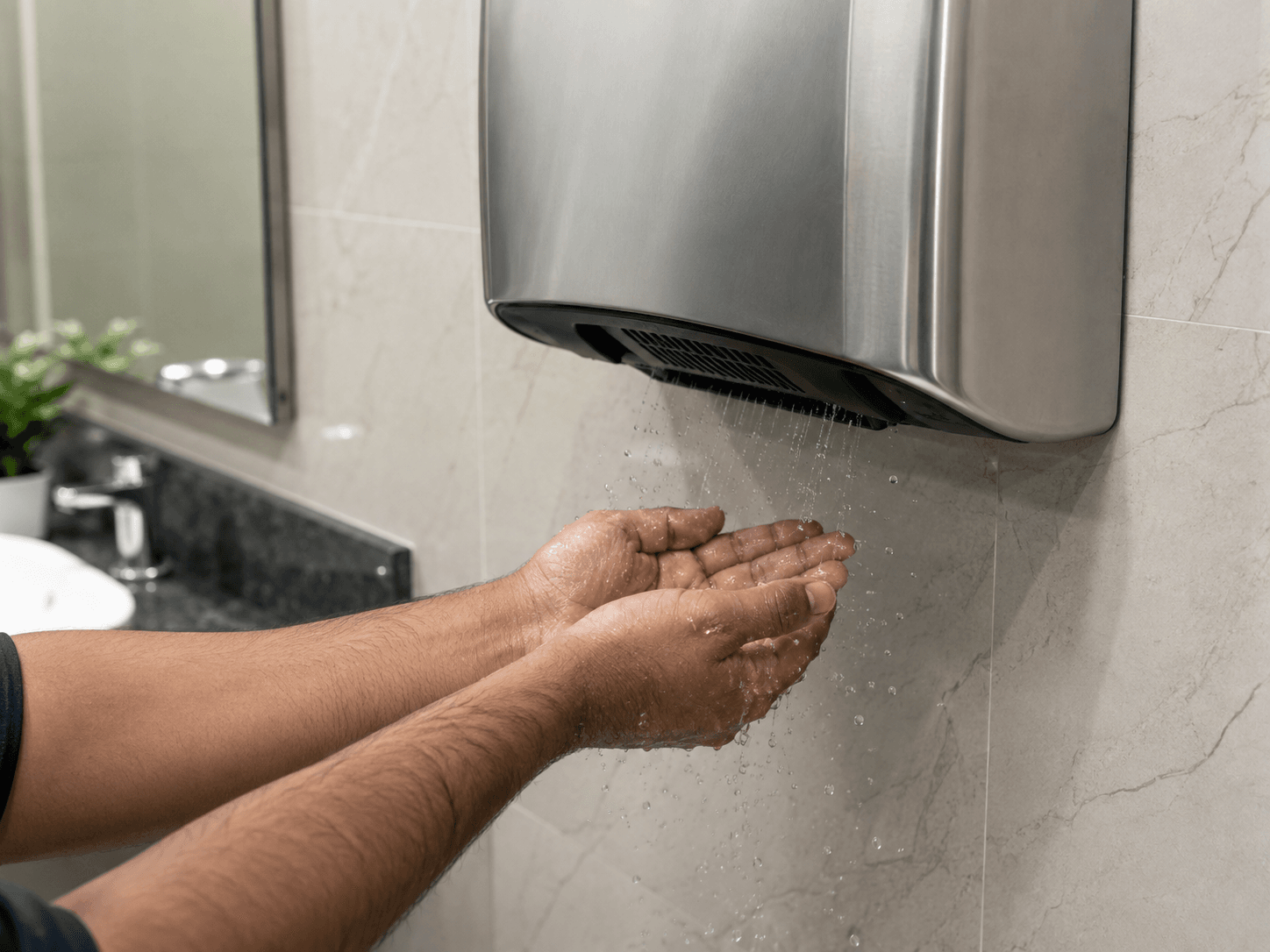
A single washroom in a 20-person office and a bank of washrooms serving a mall with 40,000 daily visitors are not the same buying problem, even though the product categories look identical on a spec sheet.
Foot Traffic Changes Everything
A mall washroom might see more hand-washing events in a single Saturday than a small office sees in a month. That volume difference should drive almost every decision in this guide, from motor duty-cycle ratings to how often soap cartridges need swapping.
The Hidden Cost of Paper Towel Dependency
Many buildings still default to paper towels because nobody re-ran the math after installing dryers. A commercial hand dryer supplier in India will usually tell you the break-even point sits somewhere between 12 and 18 months for a mid-traffic washroom, once you account for paper cost, restocking labor, and the waste bin volume paper towels generate.
Hand Dryers: What Bulk Buyers Should Know Before Ordering
Not every hand dryer on a supplier’s catalog is built for the same job, and choosing on price alone tends to backfire once a unit is running 200+ cycles a day.
Jet Air vs. Warm Air Dryers
Jet air dryers push a high-velocity stream that strips water off hands in under 15 seconds, which matters in high-traffic malls where queue length at the dryer becomes its own complaint category. Warm air dryers run slower but cost less upfront and draw less power, making them a reasonable fit for lower-traffic office washrooms where speed isn’t the deciding factor.
Noise Levels in Shared Spaces
A jet air dryer running at 80+ decibels next to an open-plan office entrance is a different problem than the same unit tucked into a mall’s washroom corridor. Ask any commercial hand dryer supplier India buyers work with for decibel ratings up front, not after installation complaints start coming in.
Power Draw and Installation Requirements
Higher-speed dryers often need dedicated circuits, which matters for older buildings where the electrical panel wasn’t sized with this load in mind. Confirm amperage requirements against your building’s existing washroom wiring before finalizing an order, especially for a hand dryer for mall washroom installation where multiple units run off the same panel.
Soap Dispensers: Manual vs. Touchless, and Why It Matters at Scale
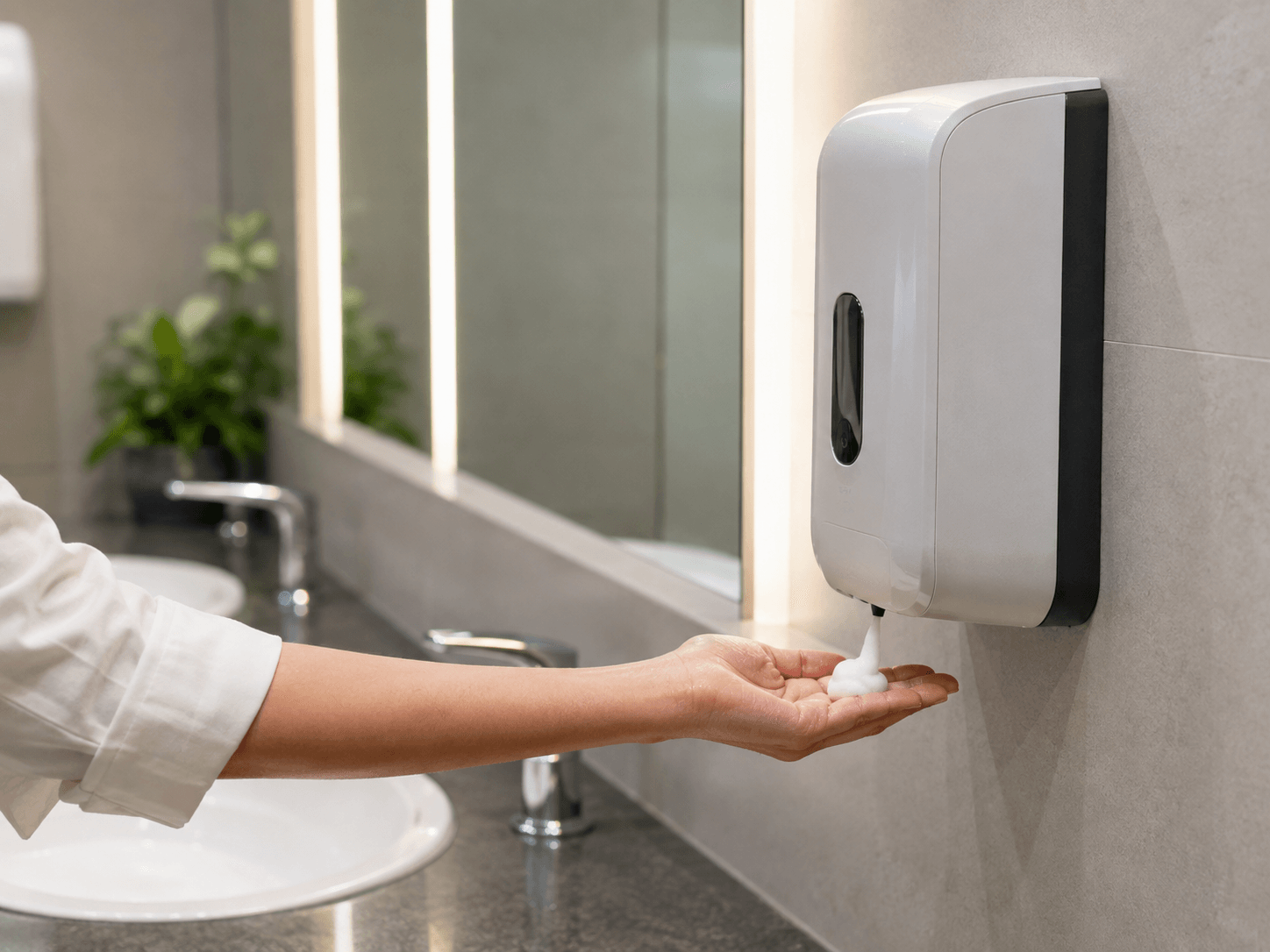
The soap dispenser choice affects hygiene perception more than almost any other washroom fixture, which makes it worth getting right even on a tight budget.
Touchless Dispensers and Hygiene Perception
A touchless soap dispenser for offices does more than reduce germ transfer. It’s become something visitors and employees actively notice and comment on, particularly post-pandemic, when a manual pump can read as outdated even if it works fine.
Foam vs. Liquid Soap Consumption Rates
Foam soap dispensers use roughly half the product per dose compared to liquid, which adds up quickly across a mall with a dozen washrooms. A foam soap dispenser commercial bulk order often pays for the price difference in consumption savings within the first few months.
Refill Logistics for High-Traffic Washrooms
Cartridge-based systems are faster to refill than bulk-fill dispensers, which matters when housekeeping staff are cycling through a full washroom bank on a tight schedule. Factor refill speed into the buying decision, not just the per-unit wall mounted soap dispenser wholesale price.
Matching Equipment to Facility Type
The right spec for an office doesn’t automatically transfer to a mall, even when both buyers are shopping the same supplier catalog.
Offices
Mid-speed warm air dryers and standard cartridge soap dispensers cover most office washrooms without overspending on capacity nobody uses during a typical 9-to-6 traffic pattern.
Shopping Malls
High-speed jet dryers and touchless, high-capacity soap dispensers are worth the premium here. Downtime or long queues at a mall washroom fixture directly affects visitor experience in a way office washrooms rarely do.
Multi-Tenant Commercial Buildings
Buildings with shared common-area washrooms serving multiple tenants need equipment specced for combined traffic across all tenants, not per-floor estimates that undercount actual usage.
Beyond Installation: Equipping Housekeeping Teams for Ongoing Maintenance
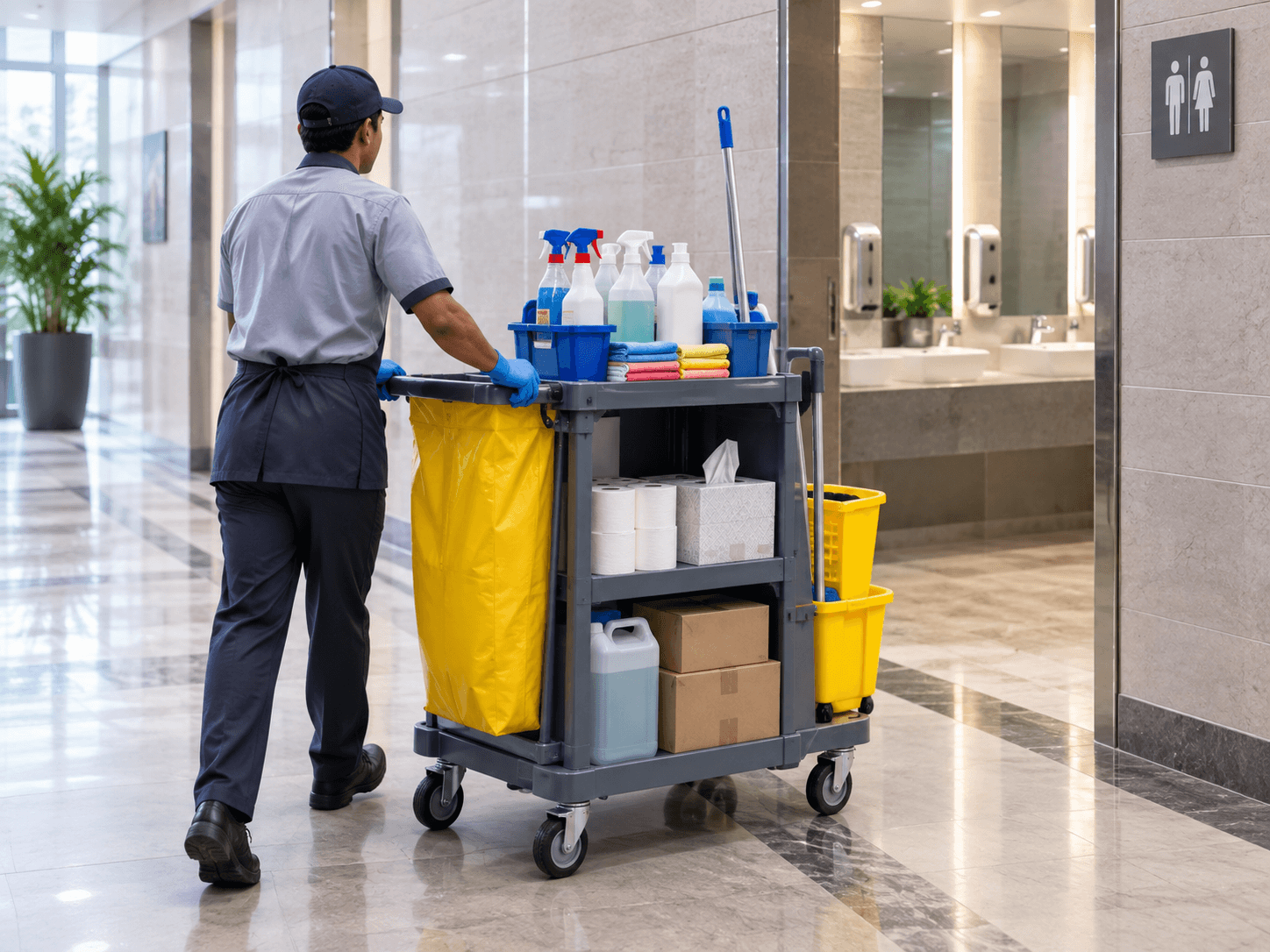
Buying the dryers and dispensers is half the job. Keeping them stocked, clean, and functioning day after day depends on whether housekeeping staff have the right equipment to service them efficiently.
Restocking Consumables With Janitorial Carts
Soap refills, spare cartridges, and hand towel backup stock all need to travel from the utility room to the washroom on something more organized than an armful of boxes. A Janitorial Cleaning Cart gives housekeeping staff a structured way to carry consumables and tools together during a washroom service round, which speeds up restocking across a mall’s full washroom bank.
Managing Cloth Hand Towel Systems With Laundry Carts
Some offices and hotels still run cloth towel dispensers alongside or instead of air dryers, particularly in premium washrooms. A Laundry Cart Trolley keeps used and fresh towels separated and organized as staff move between washrooms on a collection round.
Service Carts for Washroom Floor Care
Washroom maintenance rarely stops at the fixtures themselves. Floors need attention on the same rounds, which is where a combined approach helps. The Multipurpose Trolley Service Cart With Wringer lets staff carry consumables and handle floor mopping in a single pass through a washroom bank, and the Multipurpose Trolley with Flat Mop Buckets suits teams already standardized on flat mop systems for daily washroom floor cleaning. For smaller offices running a leaner housekeeping setup, the Multipurpose Trolley with Wringer Eco covers the same basic maintenance round without the footprint a larger cart needs.
Wringer Trolley Capacity by Facility Size
Trolley capacity should scale with the number of washrooms a single housekeeping shift needs to cover. A compact office washroom bank is usually well served by a Wringer Trolley 20 Ltr single-bucket setup, while a mid-size mall with multiple washroom clusters typically needs the extra capacity of a Wringer Trolley 40 Ltr 2 Bucket unit. Larger malls spanning multiple floors often move to a Wringer Trolley 60 Ltr 3 Bucket trolley to reduce how often staff need to return to the utility room mid-shift, and high-traffic zones with heavier soiling sometimes call for the Wringer Trolly FBT 50 ltrs double-bucket configuration to keep clean and dirty water properly separated.
Extending Service Carts to F&B and Event Spaces
Malls with food courts and event spaces have washroom demand that spikes sharply during peak hours, and housekeeping equipment needs to keep pace. A Restaurant Cart gives F&B-adjacent washroom zones a dedicated servicing tool separate from the main housekeeping rotation, while a Rectangle Cart Supply unit works well for event spaces and banquet areas where washroom servicing needs to happen alongside other setup and teardown tasks.
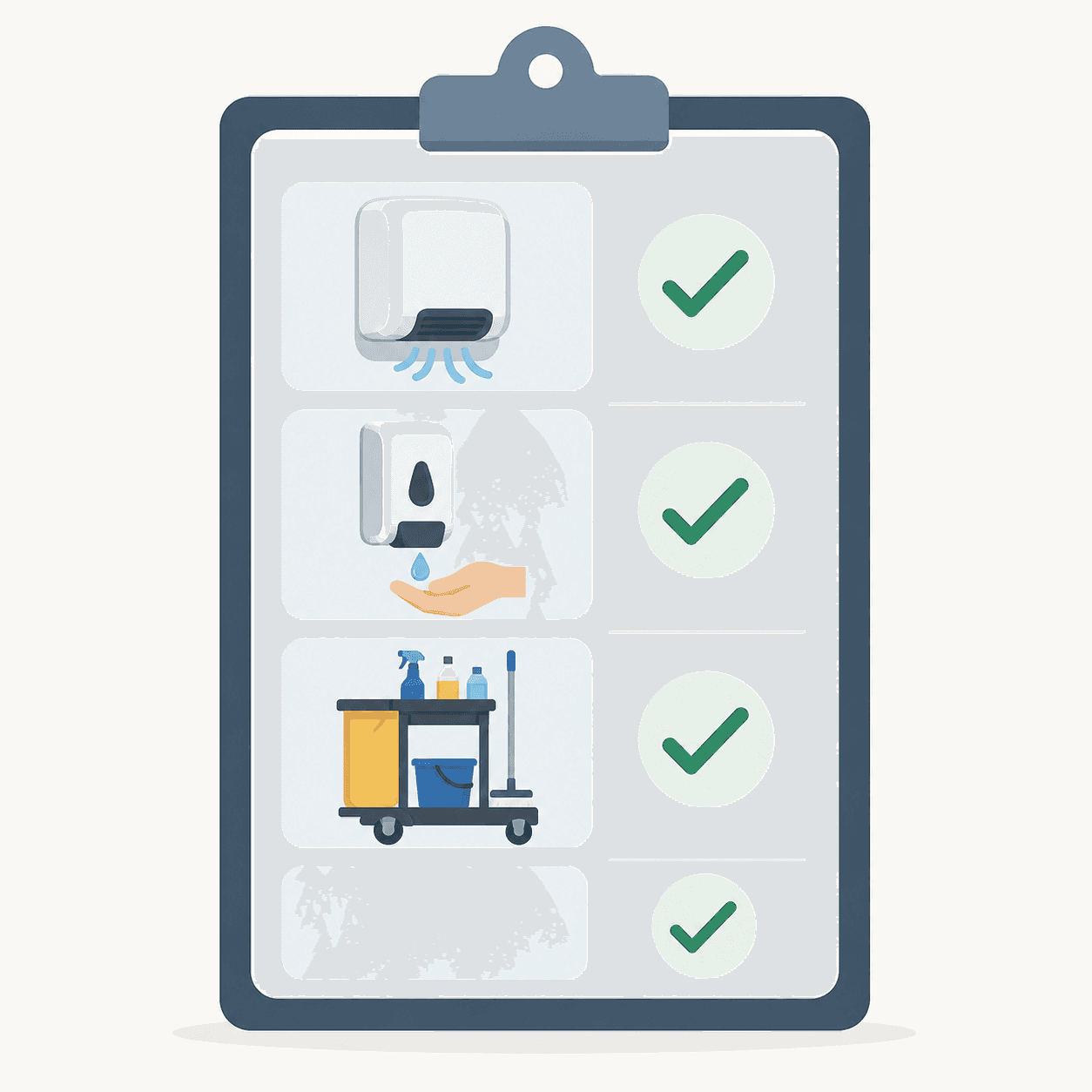
Bulk Procurement Checklist for Hand Dryers and Soap Dispensers
| Factor | What to Confirm Before Ordering |
|---|---|
| Traffic volume | Daily washroom visits per fixture, not just building headcount |
| Dryer type | Jet air for high traffic, warm air for lower-traffic offices |
| Noise rating | Decibel level suited to the washroom’s location and surroundings |
| Power requirements | Circuit capacity for the number of units on one panel |
| Soap format | Foam for lower consumption, liquid for lower unit cost |
| Refill system | Cartridge speed versus bulk-fill cost savings |
| Housekeeping equipment | Carts and trolleys sized to washroom count per shift |
| Supplier documentation | GST invoicing, warranty terms, and spare parts availability |
Frequently Asked Questions
Q: How many hand dryers does a mall washroom typically need per wash basin?
One dryer per one to two basins usually keeps queue times reasonable in a high-traffic mall washroom. Facilities with heavier peak-hour footfall, like those near a food court, often do better with a dryer at every basin to avoid bottlenecks.
Q: Is a touchless soap dispenser worth the extra cost over a manual pump?
Yes, for most offices and malls, since touchless dispensers reduce germ transfer and are now an expected hygiene standard rather than a premium feature. The price difference is usually modest against a building’s total washroom hardware budget.
Q: What’s the real cost difference between hand dryers and paper towels over time?
Hand dryers generally break even against paper towel costs within 12 to 18 months for a mid-traffic washroom, once you factor in restocking labor and waste disposal. High-traffic mall washrooms often see that break-even point arrive even sooner.
Q: Do foam soap dispensers actually save money compared to liquid soap?
Foam dispensers typically use about half the soap volume per dose compared to liquid, which adds up fast across a building with many washrooms. Most facilities recover the price gap in consumption savings within a few months of switching.
Q: What should I check with a supplier before placing a bulk order for washroom hardware?
Confirm decibel ratings and power requirements for hand dryers, refill cartridge compatibility for soap dispensers, and GST-compliant invoicing with clear warranty terms. It’s also worth asking whether the supplier stocks the housekeeping carts and trolleys needed to service the equipment, so consumable restocking doesn’t become a separate procurement headache later.
Getting the Full Picture Before You Order
Specifying hand dryers and soap dispensers for an office or mall isn’t just a fixtures decision. It’s a maintenance decision too, since even the best equipment falls short if housekeeping staff can’t restock and service it efficiently across a full washroom bank. Buyers who plan for both the fixtures and the carts and trolleys that keep them running end up with fewer mid-shift supply runs and fewer washroom complaints, which is really the whole point of getting this spec right in the first place.
About the Author: This article was prepared by the JKD Enterprises content team, drawing on experience supplying commercial washroom hardware and housekeeping equipment to offices, malls, and hospitality clients across India.