
Eco-Friendly & VOC-Free Cleaning Chemicals: A Buyer’s Guide
Key takeaways:
- “VOC-free” and “eco-friendly” are not interchangeable or regulated terms in India; ask suppliers for the actual VOC content or a recognized certification rather than accepting the label at face value.
- Concentrate-and-dilute systems reduce both cost and total chemical volume shipped and stored compared to pre-mixed retail bottles.
- Mechanical tools (brushes, scrapers, applicators) reduce how much chemical a job needs in the first place, which is a genuine part of a low-VOC cleaning program.
- Non-aerosol and cube-based odor control avoid the propellants found in traditional aerosol air fresheners.
Facility managers hear “eco-friendly” and “VOC-free” on a lot of product labels without much explanation of what those terms actually mean or how to verify them. This guide covers what to actually check before buying, how a proper dilution system reduces both cost and chemical volume, and where mechanical cleaning tools fit into a genuinely lower-impact cleaning program.
What “Eco-Friendly” and “VOC-Free” Actually Mean
These terms get used loosely enough on packaging that it’s worth understanding what they should mean before trusting a label.
VOCs and Why They Matter Indoors
Volatile organic compounds (VOCs) are chemicals that evaporate into the air at room temperature, and many traditional cleaning products release them during and after use. In enclosed spaces like offices, hotel rooms, and hospitals, higher VOC exposure has been linked to indoor air quality complaints, which is part of why facility managers increasingly ask about low VOC floor cleaner for commercial use and similar low-emission alternatives.
There’s No Single Regulated “Eco-Friendly” Standard in India
Unlike some regulated environmental claims, “eco-friendly” on a cleaning product label isn’t tied to one universal legal standard in India, which means the term can mean very different things between suppliers. When evaluating green cleaning certification for facilities, ask for the specific standard a product is certified against, such as Green Seal or EU Ecolabel, or a documented VOC content in grams per litre, rather than accepting an unqualified “eco-friendly” claim on its own.
What to Ask a Supplier Before Buying “Eco-Friendly” Chemicals
A few direct questions separate a genuinely lower-impact product from one using the label as marketing.
Request Actual VOC Content, Not Just the Label
Ask for the VOC content in grams per litre on the safety data sheet, not just a marketing claim on the front label. This is the only way to actually compare VOC-free cleaning products bulk buy options against each other on equal terms, since “low VOC” and “VOC-free” get used with very different actual thresholds by different manufacturers.

Check for Recognized Third-Party Certification
A product carrying a recognized third-party certification mark is a stronger signal than an uncertified eco-friendly claim, since certification involves independent verification rather than self-reporting. If sustainable cleaning chemicals procurement is a formal requirement for your organization, build certification verification into your supplier evaluation checklist rather than trusting label language alone.
Building a Concentrate-and-Dilute System to Reduce Chemical Volume
Regardless of formulation, how you store and dispense chemicals has a real environmental and cost impact of its own.
Bulk Concentrate Storage
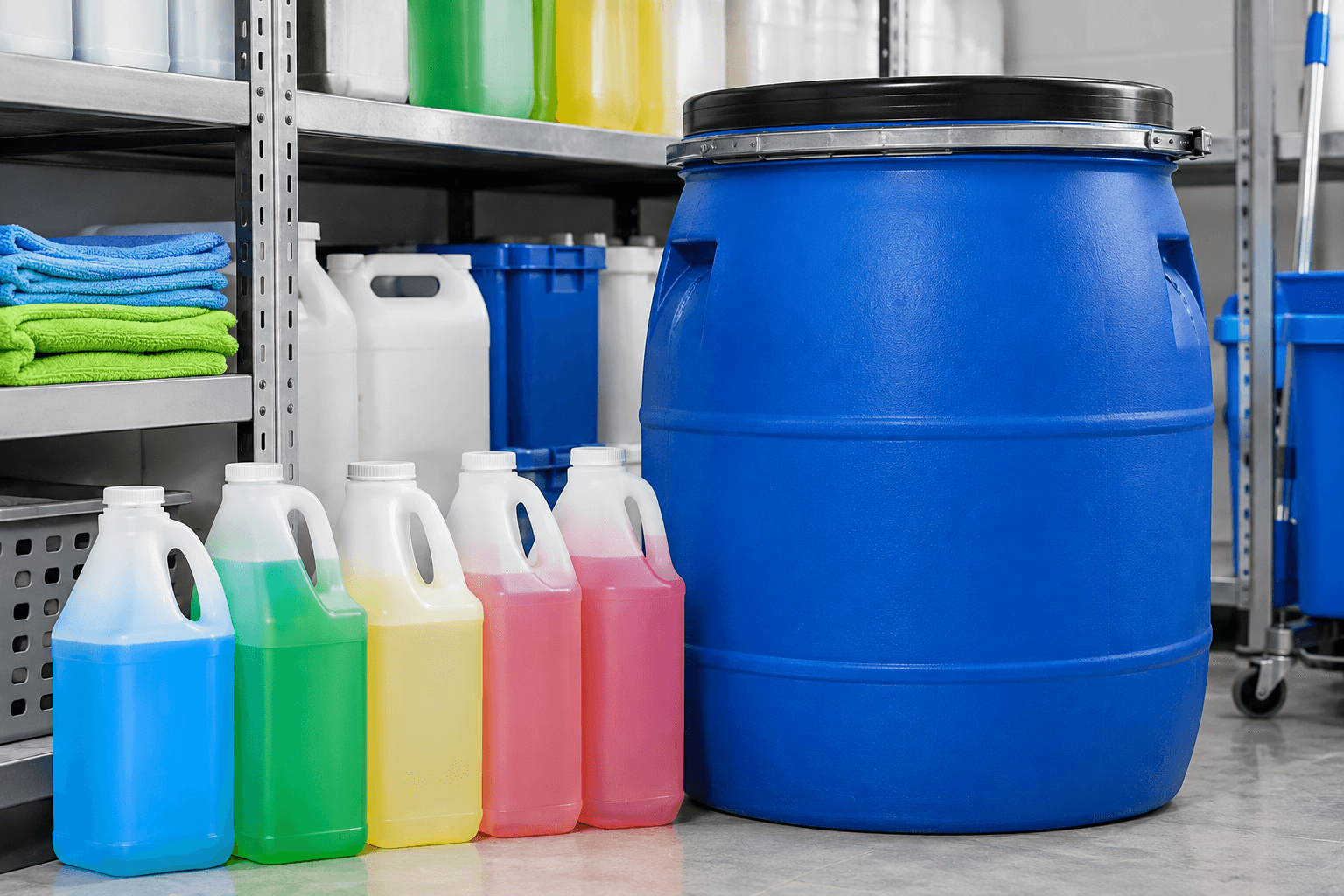
Buying concentrate in bulk and diluting it on-site reduces the total packaging and shipping volume compared to buying pre-mixed retail bottles repeatedly, since concentrate takes up a fraction of the space that diluted product does. A plastic drum 50 ltr supports this approach for mid-sized facilities, while larger operations often use a plastic drum wholesale arrangement across multiple sites to keep concentrate storage centralized.
Refill Bottles Instead of Single-Use Packaging
A reusable handwash empty bottle setup at sink stations, refilled from bulk concentrate rather than replaced each time it empties, cuts down on the single-use packaging volume a facility generates over a year. Standardizing on one refillable bottle format across a property also makes staff training on correct dilution ratios more consistent.
Mechanical Tools That Reduce Chemical Dependence
One of the most overlooked parts of a low-VOC cleaning program is reducing how much chemical a job needs in the first place, which mechanical tools do directly.
Brushes for Mechanical Scrubbing
A T brush for floor cleaning lifts grime through physical scrubbing action on grouted and textured surfaces, which reduces how much chemical is needed compared to relying on a stronger solution to do the same job chemically. The same brush design works as a shower cleaning brush, extending its use across both floor and bathroom surfaces.

Applicators That Improve Chemical Efficiency
A microfiber glass applicator spreads a small amount of cleaning solution evenly across a glass surface, which uses less product per job than an oversaturated spray-and-wipe approach. For facilities managing a lot of glass surfaces, a complete professional glass kit pairs the applicator with a squeegee, further reducing both chemical use and water waste from repeated wiping.
Manual Scraping for Spot Jobs
A mini razor scraper removes dried residue, adhesive, or paint spots through direct mechanical action, avoiding the need for a stronger solvent-based chemical to dissolve the same residue. It’s a small tool that meaningfully reduces chemical use on spot jobs that would otherwise call for a harsher product.
Existing Floor Systems and Chemical Load
If your facility already runs a spiral-technology floor system, reviewing how taski spiral floor cleaner is dosed and applied alongside your broader low-VOC goals is worth doing when you’re auditing overall chemical usage, since dosing accuracy affects both cost and total chemical volume used per cleaning cycle.
Rethinking Air Freshening Without Aerosol Propellants
Traditional aerosol air fresheners rely on propellants that add to a facility’s overall VOC load, and there are lower-impact alternatives worth considering.
Non-Aerosol Dispensing Systems
A non-aerosol air freshener for offices setup, such as an automatic air freshener spray dispenser using a pump rather than a pressurized aerosol can, avoids the propellant chemicals found in traditional canister sprays while still delivering scheduled fragrance dosing.

Passive, Continuous Odor Control
Sani fresh toilet cubes provide continuous odor control without any spray or propellant at all, which is a genuinely lower-impact option for restrooms compared to repeated aerosol use throughout the day.
Skin and Exposure Considerations for Housekeeping Staff
A lower-VOC chemical program also has a direct benefit for the staff handling these products daily, since reduced fume exposure matters for indoor air quality on the cleaning side too, not just for building occupants. Some facilities pair this with basic hand care provisions like Min Cream for staff dealing with repeated hand exposure during long shifts, as part of a broader wellbeing consideration alongside the chemical program itself.
Building a Sustainable Facility Cleaning Procurement Checklist
Turning all of this into a repeatable procurement process is what actually makes a low-VOC program stick beyond a single order.
What to Document for Each Product
For every chemical on your approved list, document the VOC content, any third-party certification, and the concentrate-to-dilution ratio your team uses. This turns eco-friendly cleaning chemicals buyer’s guide research into an actual procurement standard rather than a one-time evaluation that gets forgotten at the next reorder.
Reviewing the List Periodically
Revisit your approved product list at least annually, since formulations and certifications change, and a product that qualified as low VOC two years ago may not reflect a supplier’s current formulation. Building this review into a recurring procurement calendar keeps a sustainable facility cleaning procurement program accurate rather than static.
Sourcing Eco-Friendly Chemicals and Equipment From One Supplier
Managing certified chemicals, dilution equipment, and mechanical tools across separate vendors makes it harder to maintain a consistent low-VOC standard facility-wide. A single Wholesale Housekeeping products supplier who can document VOC content and certification across their catalog makes procurement audits considerably easier than piecing together documentation from multiple vendors. Working with a cleaning product wholesaler who understands both the chemical and equipment side of a low-VOC program, sourcing everything from bulk cleaning supplies online in one place, simplifies both ordering and compliance documentation.
Frequently Asked Questions
Q: What does “VOC-free” actually mean on a cleaning product label?
A: VOC-free means the product contains no or negligible volatile organic compounds, which are chemicals that evaporate into indoor air and can affect air quality. Since the term isn’t tied to one universal regulated standard in India, it’s worth asking suppliers for the actual VOC content in grams per litre rather than trusting the label alone.
Q: Is “eco-friendly” a regulated term for cleaning chemicals in India?
A: No, there’s no single regulated legal standard behind “eco-friendly” on cleaning product packaging in India, so the term can vary significantly between suppliers. Look for a specific third-party certification, such as Green Seal or EU Ecolabel, as a stronger signal than the label alone.
Q: How does a dilution system reduce a facility’s environmental impact?
A: Buying concentrate in bulk and diluting it on-site with reusable refill bottles significantly reduces the packaging and shipping volume compared to repeatedly buying pre-mixed retail bottles. It also typically reduces cost per use once a facility is ordering at real volume.
Q: Do mechanical cleaning tools actually reduce chemical use?
A: Yes, tools like scrub brushes, applicators, and scrapers rely on physical action to lift dirt and residue, which reduces how much chemical concentration a job requires compared to relying on a stronger solution alone. This is a genuine, verifiable part of a lower-VOC cleaning program, not just a marketing claim.
Q: What’s a lower-impact alternative to aerosol air fresheners?
A: Non-aerosol pump-based dispensers and passive odor control options like restroom cubes avoid the propellant chemicals found in traditional aerosol cans while still providing consistent fragrance or odor control. These are worth reviewing specifically for high-traffic restrooms and corridors.
Q: How often should a facility review its eco-friendly cleaning chemical list?
A: At least once a year, since product formulations and certifications can change, and a chemical that qualified as low VOC previously may not reflect a supplier’s current formulation. Building this into a recurring procurement calendar keeps the program accurate over time rather than a one-time check.
A genuinely eco-friendly cleaning program is less about chasing a label and more about verifying VOC content, choosing dilution systems that cut packaging waste, and letting mechanical tools do work that chemicals would otherwise have to do. Ask suppliers for real numbers instead of marketing language, and the “eco-friendly” claim on your procurement list will actually hold up.