
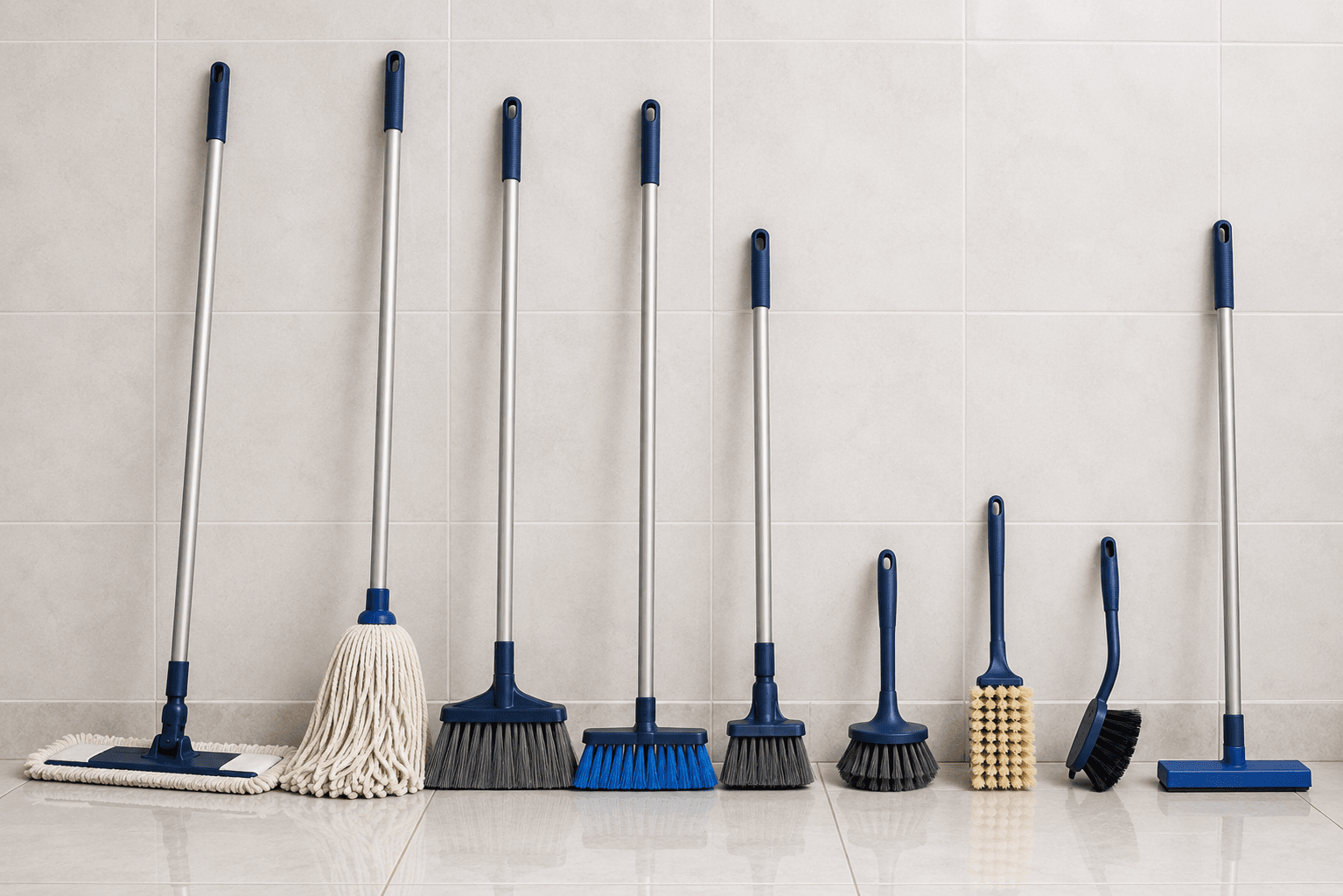
Retail-grade mops and brushes wear out fast under daily commercial use; look for commercial-rated tools rated for repeated washing and heavy contact hours.
Match mop type to floor type: microfiber flat mops for hard floors and daily rounds, cotton string mops for heavy wet-mopping and larger open areas.
Brushes need to be chosen by surface hardness and residue type, not treated as one generic category.
Bundling cleaning chemicals and consumables into the same accessories order simplifies delivery and often improves overall pricing.
Mops, brushes, and dusters rarely get a procurement conversation of their own. They tend to get ordered as an afterthought alongside chemicals, which is exactly how facilities end up with the wrong mop for their floor type or a duster that can’t reach the ceiling in a double-height lobby. This guide walks through how to choose commercial-grade cleaning accessories by task and surface, how to plan quantities, and what else typically goes into the same bulk order.
Why Commercial-Grade Cleaning Accessories Matter for Offices and Hotels
The gap between a retail mop and a commercial one shows up fast once daily use enters the picture.
The Difference Between Retail and Commercial-Grade Tools
A retail mop is built for occasional home use, maybe once or twice a week. A commercial cleaning accessories supplier stocks tools rated for daily use across multiple rooms and hundreds of wash cycles, with replaceable heads and more durable frames. Buying retail-grade tools for a facility that runs housekeeping rounds every day usually means replacing them every few weeks, which costs more over a year than a properly rated commercial tool bought once.
Cost Per Use vs Upfront Price
The upfront price on a commercial mop or brush is often higher than a retail equivalent, but the cost per use tells a different story once you account for how many wash cycles and floor-hours a commercial tool survives. Facility managers comparing options should ask about expected lifespan under daily use, not just the sticker price, since that’s what actually determines total cost over a year.
Types of Mops for Commercial Use
Not every mop suits every floor, and this is where a lot of buying guides oversimplify.
Microfiber Mops vs Cotton Mops
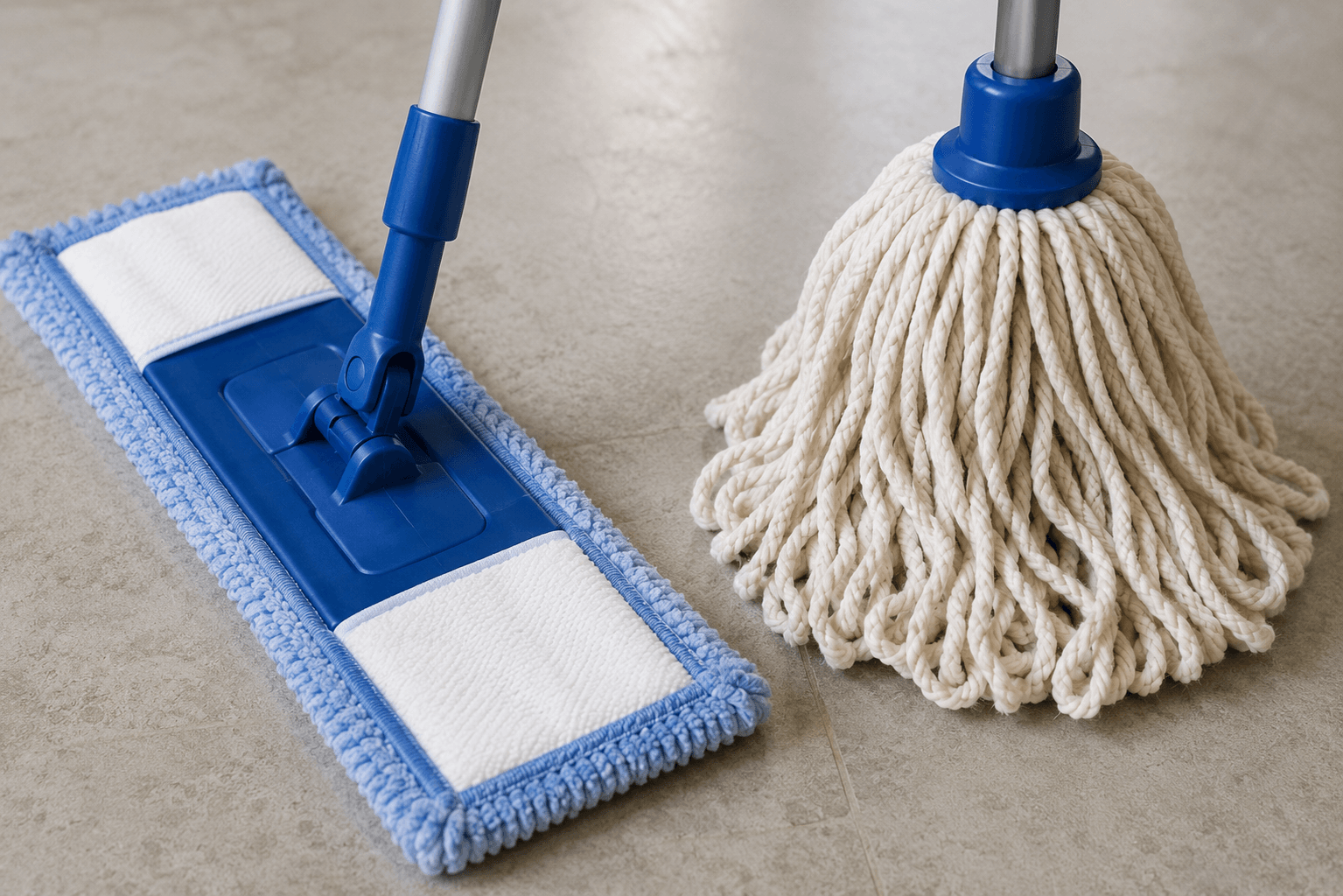
Microfiber flat mops have become the default for daily rounds on hard floors like tile, vinyl, and sealed wood, since they pick up dust and light residue without needing much water. Cotton string mops still outperform microfiber for heavy wet-mopping across large open areas like lobbies or banquet halls, where soaking up a bigger volume of liquid matters more than precision. Most facilities keep both in rotation rather than standardizing on one type across every zone.
Flat Mops vs String Mops
Flat mops are faster for daily maintenance cleaning and easier on staff over a full shift, since the head glides rather than requiring the twisting motion a string mop needs. String mops remain better suited to deep cleaning and heavily soiled areas where more absorbent material and firmer scrubbing pressure matter more than speed.
Mop Bucket and Wringer Systems
A mop is only as good as the bucket and wringer system behind it. A poorly matched wringer leaves mop heads too wet, which slows drying time and increases slip risk on hard floors. Facilities running multiple housekeeping rounds a day typically pair their mop fleet with a dedicated janitor cleaning trolley, which keeps buckets, mop heads, and spare supplies moving together instead of requiring separate trips for each item.
Choosing the Right Brushes for Different Surfaces
Brushes get treated as one category more often than any other cleaning accessory, and that’s usually a mistake.
Hard Floor Brushes
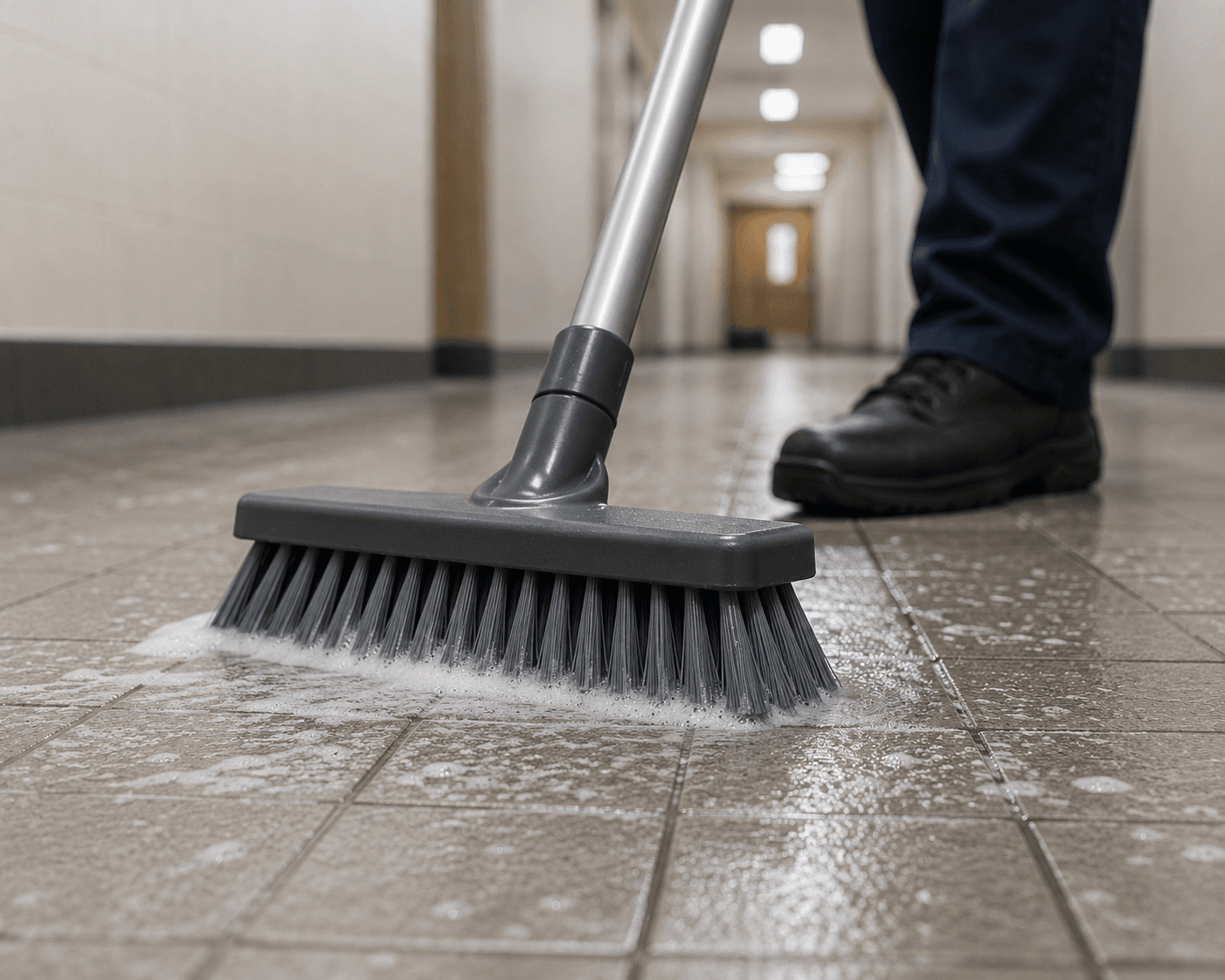
Stiff-bristle brushes work well on textured or grouted surfaces where a mop alone can’t dislodge embedded dirt, particularly in kitchens, loading docks, and outdoor entry areas. Softer bristles are better suited to polished or sealed floors where a stiff brush risks scratching the surface over repeated use.
Scrubbing and Detailing Brushes
Smaller detailing brushes handle corners, grout lines, and fixtures that a full-size floor brush can’t reach cleanly. Facilities with heavy foot traffic tend to keep a mix of both floor-size and detail brushes on hand, since relying on one size for every job usually means either wasted effort on small spots or an incomplete clean on larger surfaces.
Dusters and Reach Tools for High and Hard-to-Access Areas
Dusting gets overlooked in a lot of procurement plans, but it’s one of the fastest ways a space starts looking neglected.
Ceiling and Cobweb Dusters
Lobbies, banquet halls, and stairwells with high ceilings need a dedicated reach tool, since a standard duster simply can’t get there. A gambar ceiling broom is built specifically for this job, clearing cobwebs and dust from ceiling corners and overhead fixtures that would otherwise go untouched between deep cleans. It’s a small addition to a supply order that solves a problem most standard cleaning kits don’t cover at all.

Everyday Dusting Tools
For desks, shelving, and lower surfaces, a standard microfiber duster covers daily rounds without needing anything specialized. The key is matching duster material to surface type: dry dusters for electronics and paper-heavy desks, slightly damp microfiber for glass and hard surfaces where a dry cloth tends to just push dust around rather than lifting it.
Equipment and Tools That Support Your Cleaning Accessories
A few supporting tools solve specific problems that mops, brushes, and dusters don’t cover on their own.
Janitor Carts and Trolleys for Efficient Rounds
Beyond mop transport, a janitor trolley setup keeps brushes, dusters, and chemical bottles organized on one cart, which cuts down on how many trips housekeeping staff make between the supply room and the work area during a shift.
Scraping Tools for Stubborn Residue
Dried paint, adhesive residue, or hardened grime doesn’t respond to a mop or brush, and this is where a palti patra putty knife earns its place in a cleaning kit well beyond its original paint-scraping purpose. It’s a low-cost addition that saves a disproportionate amount of time on jobs that would otherwise need aggressive scrubbing.
Bundling Cleaning Chemicals With Your Accessories Order
Mops and brushes need chemicals to actually clean anything, so most facilities place a single combined order rather than treating tools and chemicals as separate purchases.
Carpet and Floor Care Chemicals
Facilities with carpeted lobbies or conference rooms typically stock taski tr 101 carpet shampoo for routine carpet cleaning, and for tougher stains, taski tr 103 is a common choice recognized as one of the more reliable carpet cleaner and stain remover options for commercial use. For general hard-floor maintenance, taski jontec terranova is a frequent addition to the same order, used across corridors and public areas alongside the mop fleet.
Metal, Bathroom and General Surface Care
Metal fixtures, railings, and fittings hold up better with a dedicated metal cleaner, and brasso metal cleaner remains a standard choice for this job across hotels and offices with brass or steel fittings. Bathroom procurement usually includes harpic bathroom cleaner red for toilet and bathroom surfaces, sunny green phenyl for general floor disinfection, and pitambari cleaning powder for utensils and metal surfaces in staff pantries.
Air Care, Pest Control and Kitchen Consumables
Once chemicals are on the order, it’s worth reviewing a few other recurring consumables at the same time. Odonil air freshener covers restroom and corridor odor control, a good knight mosquito machine is a common addition for ground-floor or garden-facing offices, dishwash 5 ltr stock supports any staffed pantry, and topping up facial tissue on sale for restrooms rounds out a full monthly consumables order rather than leaving it for a separate purchase later.
Why Facilities Consolidate These Purchases With One Supplier
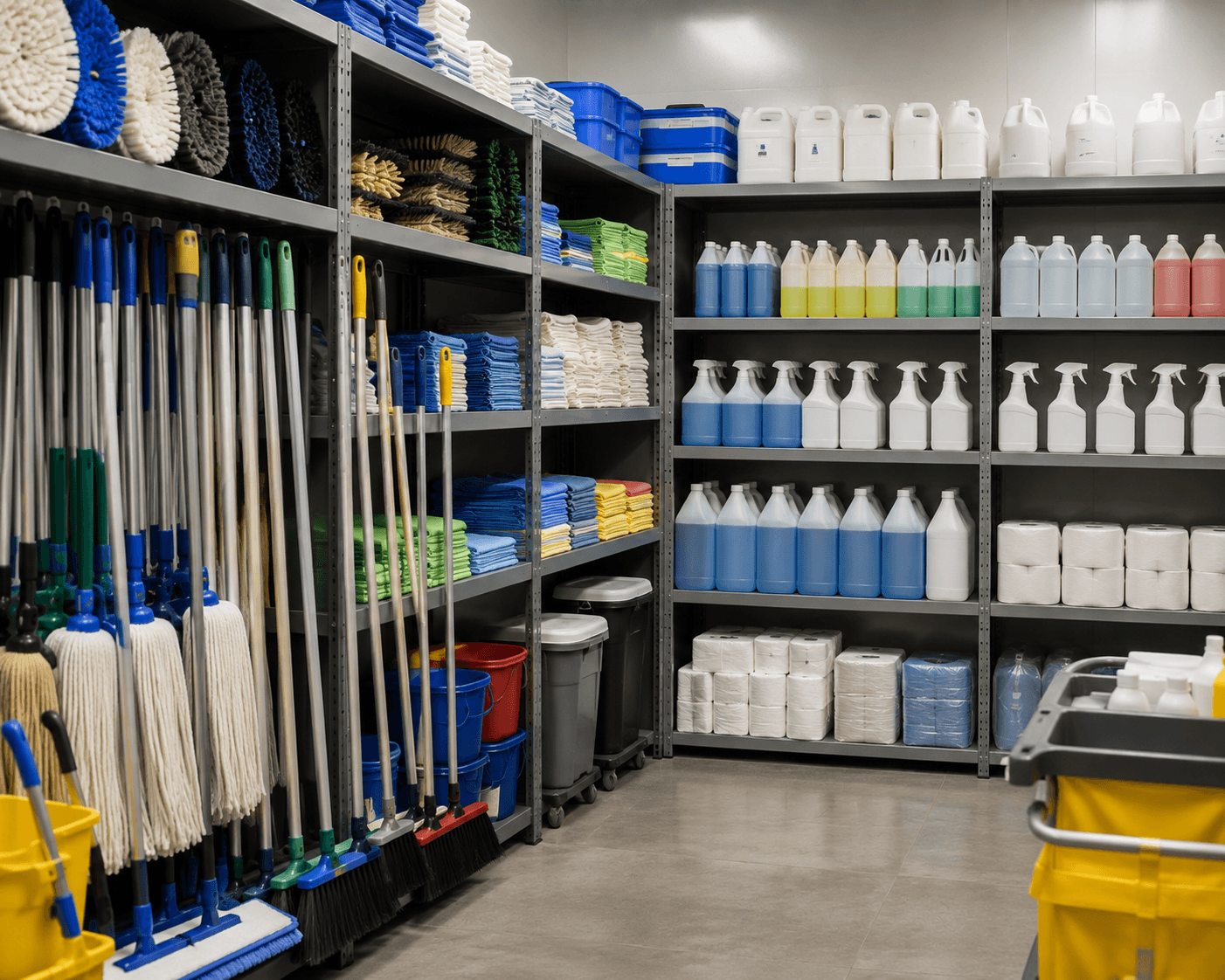
Ordering mops, brushes, dusters, chemicals, and consumables from five different vendors means five delivery schedules and five invoices to reconcile every month. Most facility teams settle on a single B2B Cleaning Products partner instead. A Wholesale Housekeeping products supplier that stocks tools, chemicals, and cleaning rags in bulk in one catalog means one delivery window covers the full order, and working with a cleaning product wholesaler who understands facility-scale ordering makes quarterly planning realistic instead of constantly reactive.
How to Estimate Quantities and Compare Suppliers
Once the product list is settled, the remaining work is sizing the order correctly and comparing suppliers on more than headline price.
MOQ and Reorder Points
Ask about minimum order quantities and whether better pricing tiers apply above a certain unit count, since bulk cleaning tools for facility management purchases often unlock discounts that aren’t visible on a standard price list. Set a reorder point for consumable items like mop heads and brush bristles at around one full replacement cycle ahead, so a worn tool never goes unreplaced mid-week.
What to Ask Before You Commit
Confirm lead time, minimum order value, and whether replacement parts (mop heads, brush refills) are available separately from full units, since buying an entire new mop every time the head wears out is far more expensive than replacing heads alone. A supplier offering wholesale cleaning products online ordering with clear replacement-part pricing is generally the better long-term partner over one that only sells complete units.
Frequently Asked Questions
Q: What type of mop is best for commercial cleaning?
Microfiber flat mops work best for daily maintenance on hard floors like tile and vinyl, while cotton string mops handle heavy wet-mopping across larger open areas like lobbies. Most commercial facilities keep both types in rotation rather than standardizing on one.
Q: How often should commercial mop heads be replaced?
Mop heads used daily in a commercial setting typically need replacing every four to six weeks, depending on floor type and wash frequency. Buying replacement heads separately rather than full new mops each time is the more cost-effective approach.
Q: What’s the difference between commercial and retail cleaning brushes?
A: Commercial-grade brushes are built for daily use with more durable bristles and frames rated for hundreds of use cycles, while retail brushes are designed for occasional home use. Facilities that use retail-grade brushes daily typically end up replacing them far more often, which costs more over time.
Q: How do I clean high ceilings and cobwebs in a commercial space?
A long-handled ceiling duster or cobweb broom is built specifically for reaching overhead corners and fixtures that standard dusters can’t access. These should be part of a regular cleaning rotation, not just used during deep cleans.
Q: Should I buy cleaning tools and chemicals from the same supplier?
Yes, ordering mops, brushes, dusters, and cleaning chemicals from one wholesale supplier simplifies delivery scheduling and invoicing. It also tends to improve pricing since your total order volume with that supplier is higher than splitting purchases across vendors.
Q: How many mops and brushes does a commercial facility need?
A reasonable starting point is one mop and one general-purpose brush per housekeeping zone, plus dedicated detailing brushes for kitchens, restrooms, and high-traffic entry points. Larger facilities running multiple simultaneous cleaning rounds typically need duplicate sets per floor rather than sharing tools across zones.
Q: What should be included in a cleaning accessories procurement order for offices?
A complete order typically includes mops (microfiber and string), floor and detailing brushes, ceiling dusters, a janitor cart or trolley, and the chemicals needed to use them, such as floor cleaners and carpet shampoo. Bundling all of this into one order reduces the number of separate deliveries facilities need to manage.
Mops, brushes, and dusters don’t need a complicated procurement process, but they do need more thought than treating every tool as interchangeable. Match the tool to the surface and the task, plan replacement cycles instead of waiting for something to wear out mid-shift, and bundle the chemicals your team actually uses into the same order so restocking becomes a quarterly task instead of a weekly scramble.