
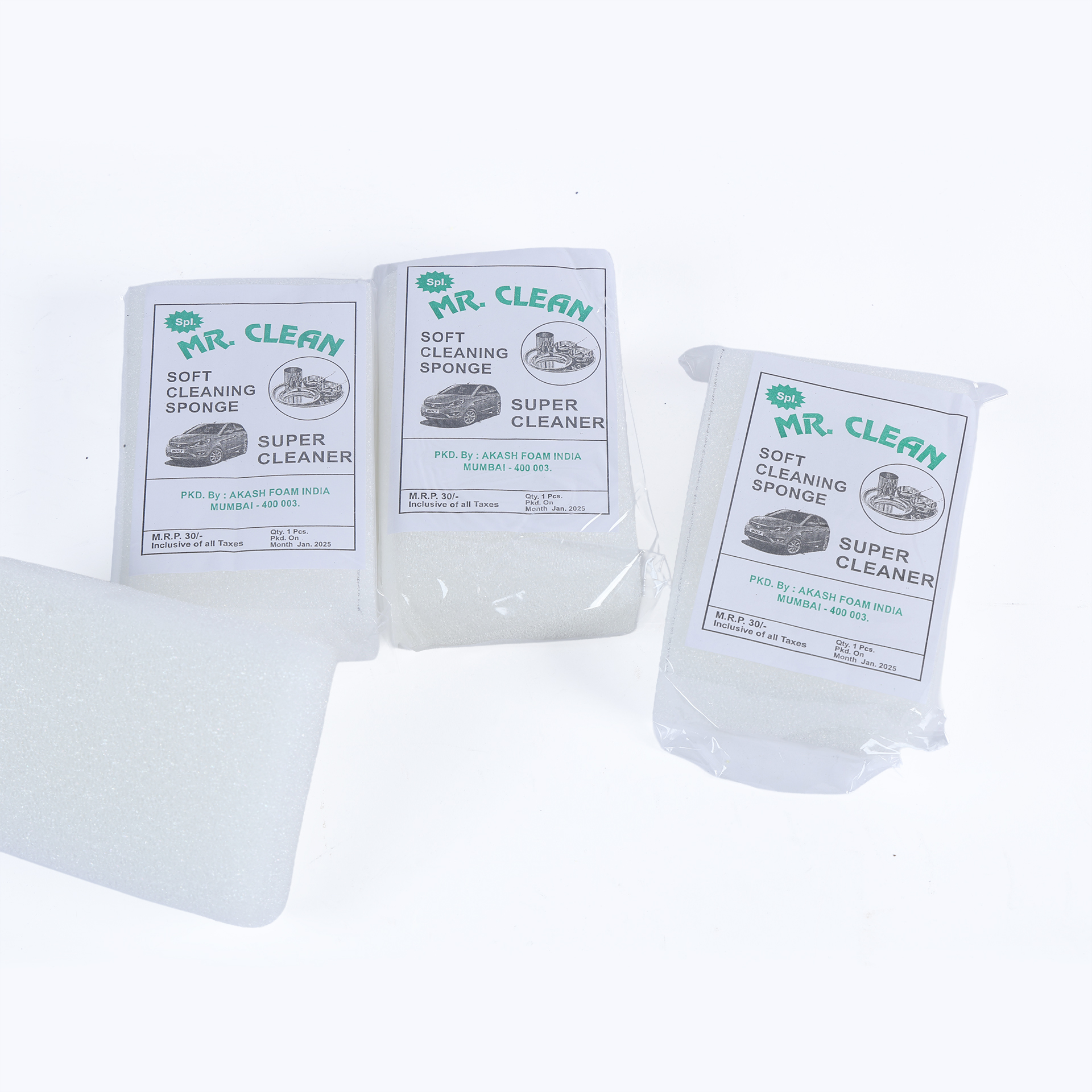
Description
What Makes a Cleaning Sponge Best in a Commercial Context and Why Does It Matter for Bulk Buyers?
The Word Best in a product name is marketing language, but the question it implies is real: what separates a sponge that works for a single shift in a commercial kitchen from one that falls apart after two days? For institutional buyers sourcing sponges in bulk hotels, hospitals, school kitchens, catering companies the answer comes down to abrasive layer durability, foam density, and whether the product holds its shape through repeated compression and soaking.
What Specifications Define a Commercial-Grade Sponge?
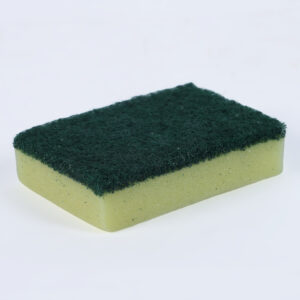
A standard kitchen sponge has two components: a soft cellulose or PU foam body for holding water and detergent, and a bonded abrasive pad on one face for scrubbing. In consumer products, the abrasive layer is thin and starts shedding after a week of heavy use. Commercial-grade sponges use a more securely bonded abrasive with higher abrasive density they scrub harder and shed less, extending the usable life before the sponge needs replacing.
Foam density matters for liquid absorption. A dense foam holds more detergent per squeeze, which means fewer top-ups during a cleaning session. For a kitchen worker cleaning 200 plates in a shift, the difference between re-soaping every 20 plates and every 40 plates is real labour time.
Buyers comparing sponge products for bulk purchase should also check whether the abrasive is colour-coded by grade. Some commercial ranges use green for medium scrub, blue for light scrub, and yellow for non-scratch surfaces. For kitchens with coated cookware or stainless steel surfaces, using the wrong abrasive grade causes visible surface damage over time a problem that shows up in equipment replacement costs rather than the cleaning supply budget.
The Best Sponge for Kitchen Dish Scrubber in JKD’s range addresses the specific scrubbing load of commercial dishwashing a heavier application than general surface cleaning, and worth specifying separately.
Which Buyers Order Cleaning Sponges in the Highest Volumes?
Hotel kitchens and F&B operations run through sponges quickly. A kitchen processing 500 covers a day might replace sponges every 2–3 days under food safety protocols that require regular sponge changes to prevent bacterial buildup. FSSAI and HACCP guidelines both note that cleaning tools in food contact areas should be replaced before they become contamination vectors which creates a predictable, compliance-driven replenishment cycle.
Hospital central kitchens, school midday meal programmes, and corporate cafeterias follow the same pattern. Contract cleaning companies cleaning commercial kitchens for clients stock sponges in large quantities as part of their consumables supply.
The kitchen wipes 3G and kitchen wipes 3M serve the surface wiping function alongside the sponge’s scrubbing role most commercial kitchen cleaning programmes use both in combination, and distributors supplying kitchen cleaning consumables stock all three.
How JKD Enterprises Serves the B2B Sponge Market
JKD Enterprises supplies sponges wholesale to cleaning product distributors, catering supply companies, and institutional buyers. For buyers consolidating their kitchen hygiene consumables under one wholesale supplier, the sponge range pairs with wipes, mops, and other cleaning accessories in the JKD product portfolio.
Sponge for dish scrubber
A sponge is an essential cleaning tool designed to deliver efficient yet gentle cleaning across various surfaces. It features a soft, lightweight structure filled with tiny pores that may be natural or synthetic. This porous design allows the sponge to absorb water and cleaning solutions effectively, making everyday cleaning faster and more efficient. thanks to its flexible and absorbent nature, a sponge distributes soap and water evenly, ensuring thorough cleaning without excessive effort. Whether used for washing dishes, wiping surfaces, or applying detergents, it provides a gentle touch that is safe for delicate items while still offering strong cleaning performance. Sponges are available in natural and synthetic varieties natural sponges are eco-friendly, while synthetic sponges are known for durability and long-term use. A sponge is widely used in households, restaurants, hotels, and commercial kitchens. From cleaning utensils to wiping countertops, a sponge for the kitchen plays a vital role in maintaining hygiene and cleanliness. Modern sponges come in different types such as cellulose sponges, scrub sponges, wire-mesh sponges, and antibacterial sponges, each created for specific cleaning needs.
Uses and Benefits of Sponge – A sponge for the kitchen is mainly used for washing utensils, scrubbing cookware, and removing food residue from plates and pans. A sponge for dish scrubbing helps eliminate tough stains, grease, and burnt food without damaging non-stick or delicate surfaces. beyond utensils, a sponge is also used for cleaning kitchen countertops, sinks, glass surfaces, tiles, stoves, refrigerators, and dining tables. It is highly effective for absorbing spills and wiping surfaces clean. In hotels and the food industry, a sponge for dish scrubbing is essential for maintaining sanitation and reducing the risk of cross-contamination. One of the major benefits of a sponge is its ability to absorb water and soap quickly, creating rich lather with less detergent. This helps save time, effort, and cleaning products. Its flexible structure allows it to reach corners, curves, and tight spaces that cloths cannot easily clean. Additionally, a sponge for the kitchen is cost-effective, lightweight, reusable, and easy to replace. Antibacterial sponge options help prevent bacterial growth and support better hygiene. Eco-friendly sponge options also contribute to sustainable cleaning practices.
Q: What is the abrasive pad grade on the JKD Best Sponge?
A: Contact JKD Enterprises at Best Sponge for current specifications including abrasive grade and foam density.
Q: How often should commercial kitchen sponges be replaced?
A: Under FSSAI and HACCP guidelines, cleaning tools in food contact areas should be replaced when worn or when they could harbour contamination. In high-volume kitchens, this is typically every 2–5 days.
Q: Is this sponge suitable for stainless steel surfaces?
A: Confirm the abrasive grade with JKD before using on stainless steel. The wrong abrasive can scratch polished SS surfaces. Non-scratch variants are available for delicate surfaces.
Q: What is the MOQ for bulk sponge orders?
A: Submit a wholesale enquiry at Best Sponge for current MOQ and pricing.
Q: Can sponges be ordered alongside kitchen wipes in the same shipment?
A: Yes. JKD Enterprises handles combined orders of kitchen cleaning consumables. Contact the team to discuss bundle pricing.