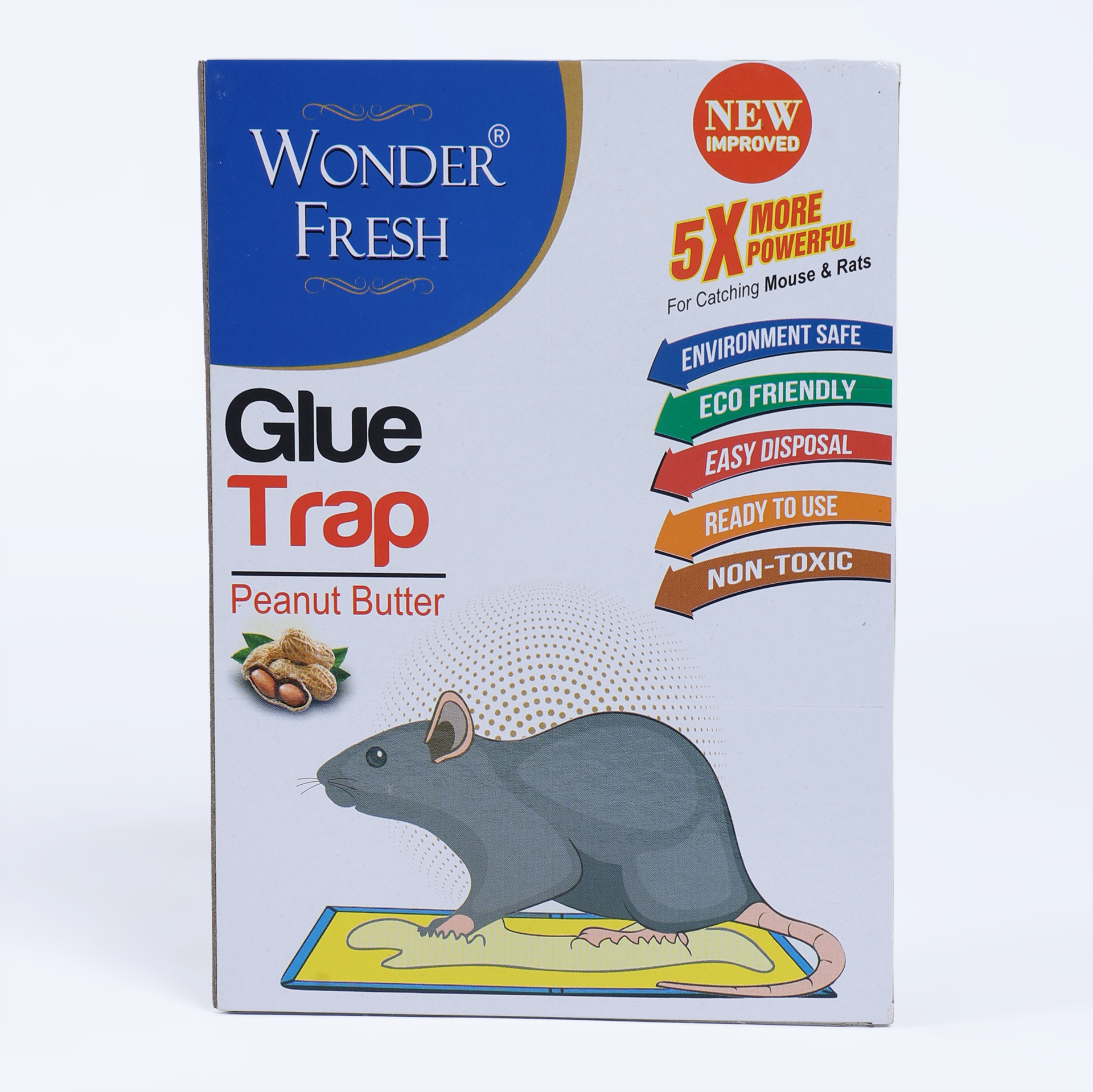


Rat Glue Trap Mouse Traps, Rodent Controls & Repellents
Introducing the Mouse Rat and Glue Pad, a highly effective solution for trapping and controlling mice and other rodents in your home or business. This device is designed to provide a straightforward and reliable method for managing rodent problems by using a powerful adhesive to immobilize them upon contact.The Mouse Rat and Glue Pad features a strong, sticky surface that traps rodents instantly as they come into contact with it. This ensures a quick and efficient capture, reducing the risk of mice spreading diseases or causing damage to your property. The large, flat design covers a significant area, increasing the chances of trapping mice as they traverse the pad.
Easy to use, simply place the glue pad in areas where rodent activity is suspected, such as along walls, behind appliances, or in corners. Its discreet design allows it to blend into various environments without drawing attention.Ideal for both residential and commercial use, the Mouse Rat and Glue Pad is a practical, no-fuss solution for maintaining a rodent-free environment. Choose this pad for effective, humane rodent control that ensures peace of mind and a cleaner, safer space.
Why Do Rodent Glue Pads Remain the Most Widely Deployed Rodent Control Tool in Indian Commercial Facilities?
Electronic traps and bait stations have their place, but rodent glue pads outsell them in institutional settings for practical reasons. They require no installation, no electricity, no chemicals, and no specialist training. A glue pad is placed, monitored, and disposed of the entire process is self-contained and safe for staff handling. For hotels, food processing units, hospitals, and warehouses trying to control rodent activity across multiple areas simultaneously, deploying 20 glue pads costs a fraction of setting up the equivalent electronic trap network. Volume and coverage, not technology, drives most institutional pest control at this level.
What Should Buyers Check Before Specifying Glue Pads for Institutional Pest Control?
Adhesive strength is the primary performance variable. A glue pad with weak adhesive captures small mice but allows larger rats to pull free defeating the purpose. Commercial-grade pads use a high-tack resin adhesive that holds consistently across a range of temperatures and humidity levels. In India’s climate, where storage room temperatures can exceed 35°C in summer, adhesive that softens and loses tack in heat is a real performance issue. Specify pads with a stated operating temperature range.
Pad size matters for rodent coverage. A small pad (approximately 20×15 cm) is suitable for mice in enclosed areas. Larger pads (30×20 cm or more) handle larger rodents and provide more surface area for capture in high-activity zones. Facilities with documented rat activity should use larger format pads rather than trying to compensate with higher density of smaller ones.
Base rigidity affects placement reliability. A flimsy pad that curls or shifts on uneven flooring reduces capture effectiveness rodents walk around the edge rather than across the surface. Rigid cardboard or PP-base pads maintain flat contact with the floor.
For facilities deploying glue pads alongside other pest control measures including mosquito vaporisers for flying insect control and Good Night refills for room-level mosquito management a combined pest control consumables order through one wholesale supplier reduces procurement complexity.
Which Institutional Settings Have the Highest Demand for Rodent Glue Pads?
Food processing plants are the most compliance-driven buyers. FSSAI Food Business Operator standards require documented pest control programmes, and rodent activity is a critical non-conformance in food facility audits. Glue pads are part of the standard pest control toolkit used by food facility pest management teams across India, both in-house and through contracted pest control operators.
Hotels and restaurants have similar imperatives rodent sightings are brand-damaging events that trigger immediate remediation. Warehouses and logistics facilities deal with rodent pressure from the goods they store. Hospitals and healthcare facilities need rodent control as part of infection prevention rodents carry pathogens that are directly relevant to hospital infection control programmes.
DPIIT data shows India’s food processing sector continues to expand, and FSSAI compliance enforcement is increasing alongside it. This drives steady demand for pest control consumables as food manufacturers professionalise their facility hygiene programmes.
Sourcing Mouse and Rat Glue Pads Through JKD Enterprises
JKD Enterprises supplies mouse and rat glue pads wholesale to institutional buyers, pest control distributors, and cleaning supply companies across India. Pan-India delivery and consistent batch quality make the product a reliable item for distributors serving food processing and facility management clients.
Q: What adhesive type is used on the JKD Mouse Rat Glue Pad?
A: Contact JKD Enterprises at jkdenterprises.in/product/mouse-rat-trap-glue-pad/ for adhesive specification including operating temperature range and tack strength.
Q: What sizes are available for institutional use?
A: Submit an enquiry at the product page for current size options. Both mouse-scale and rat-scale pad sizes are available for different deployment scenarios.
Q: Are these pads suitable for food processing environments?
A: Yes. Glue pads are a standard component of FSSAI-compliant pest control programmes in food facilities. Confirm deployment guidelines with your pest control programme requirements.
Q: What is the MOQ for wholesale orders?
A: Contact JKD Enterprises for current wholesale MOQ and pricing. Volume pricing is available for bulk orders.
Q: Can glue pads be ordered alongside other pest control products?
A: Yes. JKD Enterprises handles combined pest control and hygiene product orders. Contact the team for multi-product ordering options.